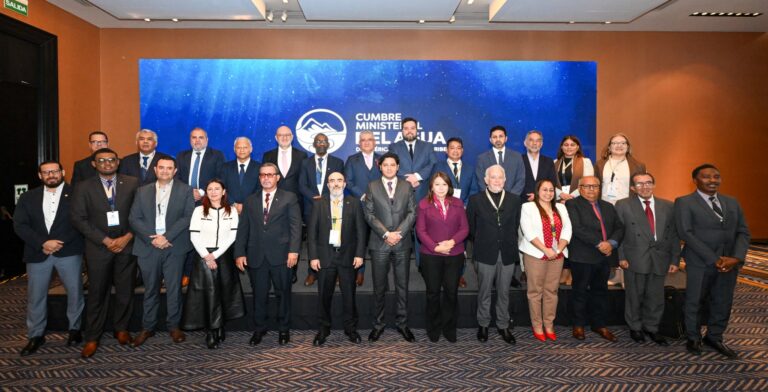
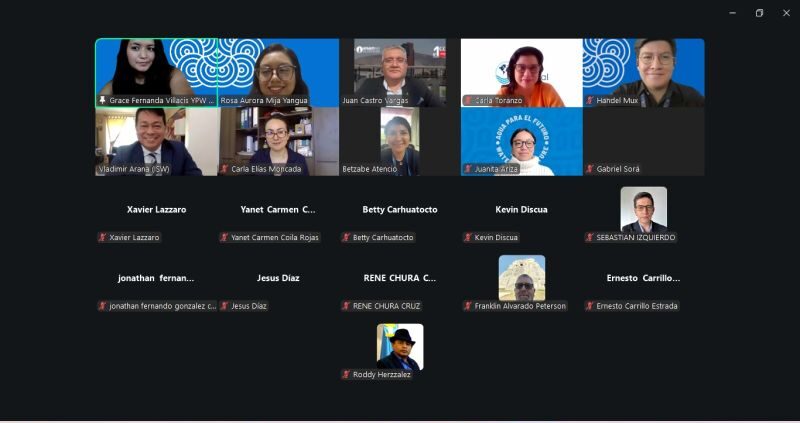
Exactly one year after the historic adoption of the Latin America and the Caribbean (LAC) Water Roadmap by regional Ministers of the Environment, a high-level roundtable co-orginazed by the International Secretariat for Water (ISW) and the LAC chapter of the World Youth Parliament for Water convened to assess progress, strengthen regionl governance, and address critical threats facing the continent.
A regional call amid environmental and institutional crisis
Former Minister of Environment of Peru, Mr. Juan Carlos Castro, highlighted both progress achieved and persistent gaps in implementation.
Reflecting the concerns of the host country, Mrs. Betsabé Atencio, Director General of Water Resources and representative of the Minister of Environment of Panama (Mr. Juan Carlos Navarro), warned of an impending regional water crisis threatening ecosystem stability and human security.
Adding to this urgency, Mr. Vladimir Arana (ISW) raised concerns about climate projections, noting that a Super El Niño event is forecast to affect the LAC region by the end of 2026. This phenomenon is expected to significantly exacerbate existing vulnerabilities, exposing multiple subregions to simultaneous cycles of extreme droughts and flooding.
Inclusivity and governance integration
A central theme of the discussion focused on how the region will present itself at the upcoming UN 2026 Water Conference.
Mrs. Carla Elias, Director of AIDIS and President of ABIS La Paz, raised concerns regarding the coherence of Latin America and the Caribbean’s unified positioning on the global stage.
Panelists emphasized that advancing Sustainable Development Goal 6 (SDG 6) requires breaking institutional silos. Mrs. Carla Toranzo, CEO of Agua Global, stressed the need for stronger policy integration, urging Ministers of the Environment in the LAC region to formally align water strategies with broader environmental governance frameworks.
All participants agreed that inclusive governance is a prerequisite for effective policy implementation. Mrs. Grace Villacis, representing the LAC Youth Parliament for Water,
emphasized that youth are not merely beneficiaries, but essential structural partners in the design and implementation of resilient.
Main takeaways and political demands
- The LAC Water Roadmap must move from voluntary commitments to effective implementation, with civil society organizations and youth networks structurally integrated into implementation mechanisms.
- Joint and coordinated regional action is necessary to mitigate the impacts of the upcoming 2026 Super El Niño.
- The Forum of Ministers of the Environment has a responsibility to institutionalize the participation of CSOs and youth organizations within the regional water agenda, ensuring a democratic and resilient transition toward the 2026 UN Water Conference.