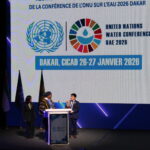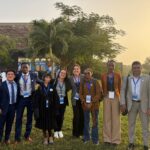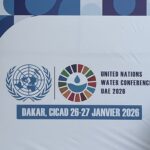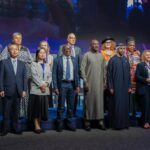
At the start of a year marked by major international water milestones, the International Secretariat for Water (ISW) mobilized in Dakar (January 2026) to engage in the High-Level Preparatory Meeting of the 2026 UN Water Conference, and its one-day stakeholder meeting. This key moment offered a strategic opportunity to position ISW and the platforms we are catalyzing – the Global Youth Movement for Water and the Butterfly Effect NGO coalition – at the heart of ongoing and future discussions on global water governance.
ISW worked to elevate stakeholder priorities identified through its “On the road to the 2026 UN Water Conference” webinar series to the highest political level, while safeguarding the continuity of commitments made across key global water processes, from Dakar and the Blue Deal from the World Water Forum 2022 and the 2023 UN Water Conference and beyond. Continuity and accountability are central to ISW’s advocacy: youth and civil society play a fundamental role in reminding decision-makers of past commitments, tracking progress, proposing solutions and holding institutions accountable for turning promises into action.
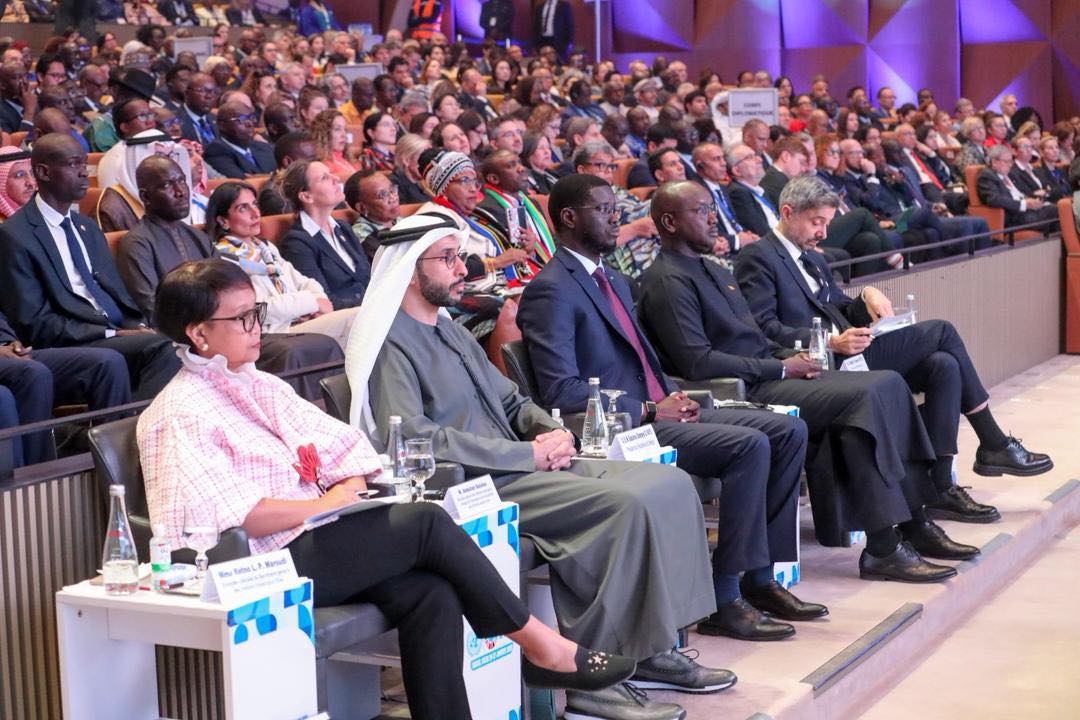
Dakar proved to be a critical space to elevate aligned youth and civil society voices, contribute to agenda-setting toward December 2026, and initiate reflections extending beyond 2028 and into the post-2030 horizon. Through high-level exchanges, multistakeholder dialogues, and youth-led interventions, ISW reinforced its role as a convening and bridging platform between grassroots actors and international policy processes, while strengthening relationships with governments, UN entities, and key institutional partners.
Strong civil society and youth empowerment
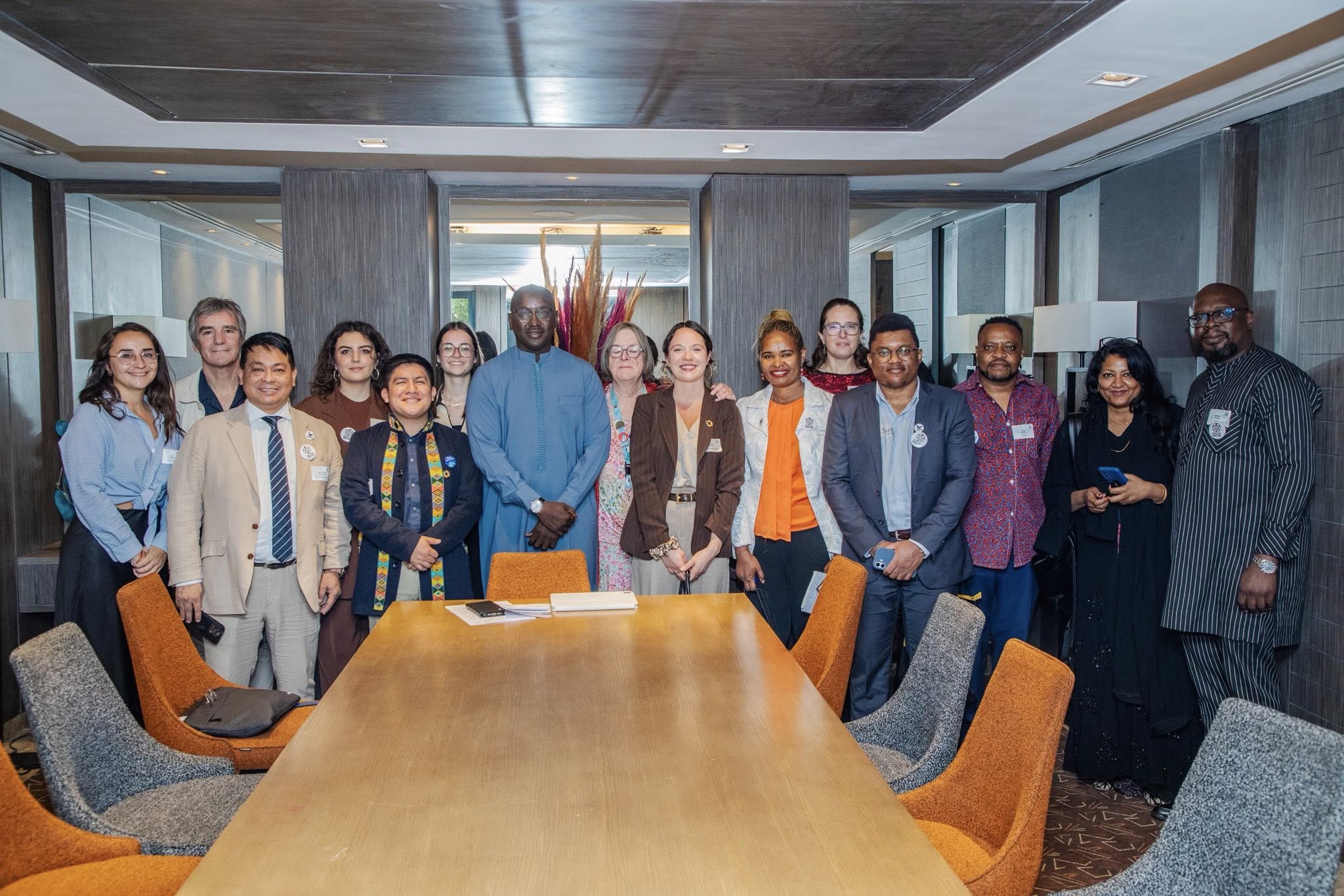
Despite significant challenges related to visas and limited funding, ISW coordinated civil society’s participation through the Butterfly Effect NGO Coalition, with more than 12 member organizations present in Dakar. More broadly, the meeting was marked by strong and encouraging mobilization of civil society actors, particularly during the stakeholder sessions but also within the official conference itself. Importantly, the outcomes of the six interactive dialogues were formally restituted in the official plenaries, signaling clear openness from the co-hosts to more inclusive participation.
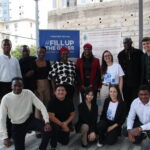
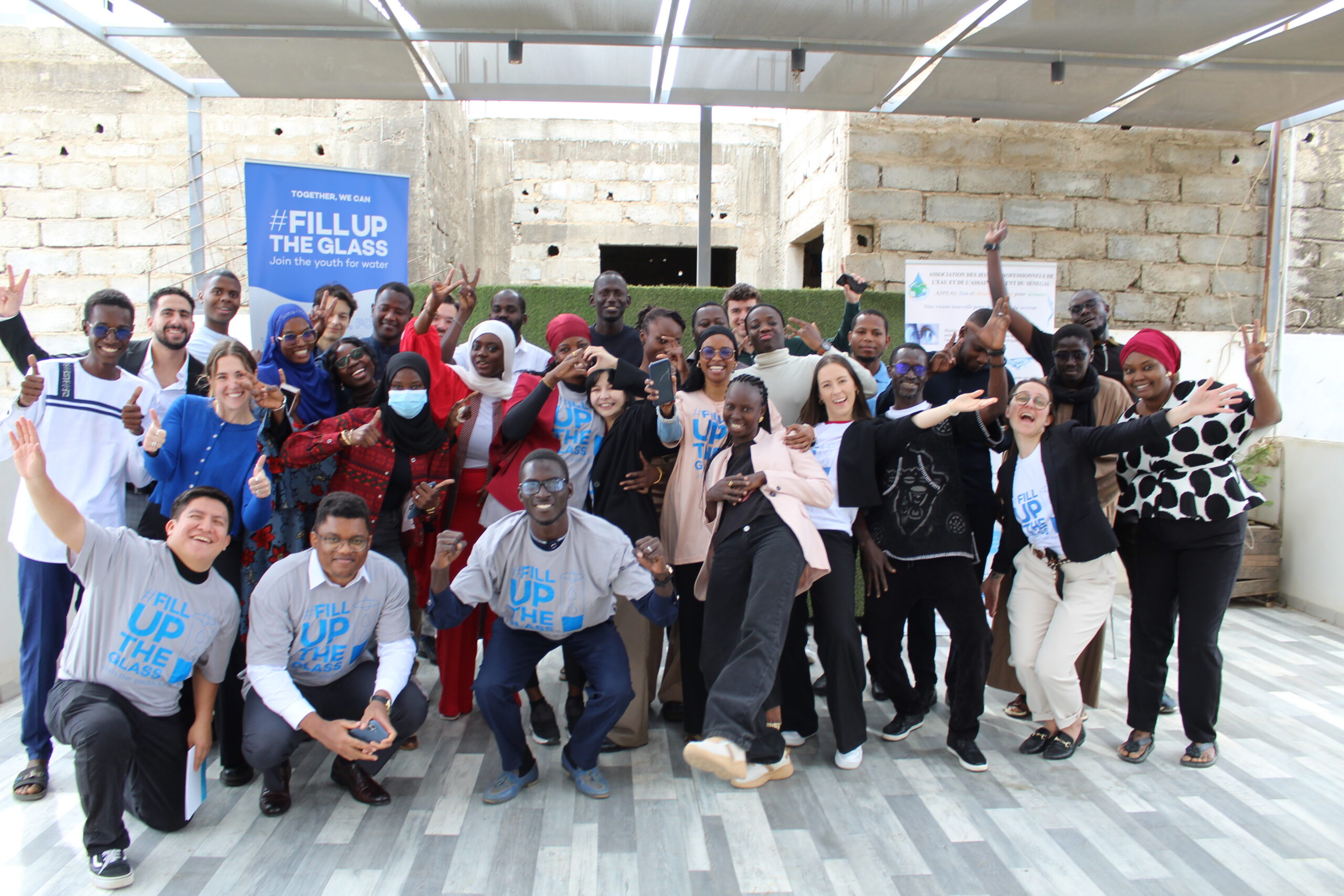
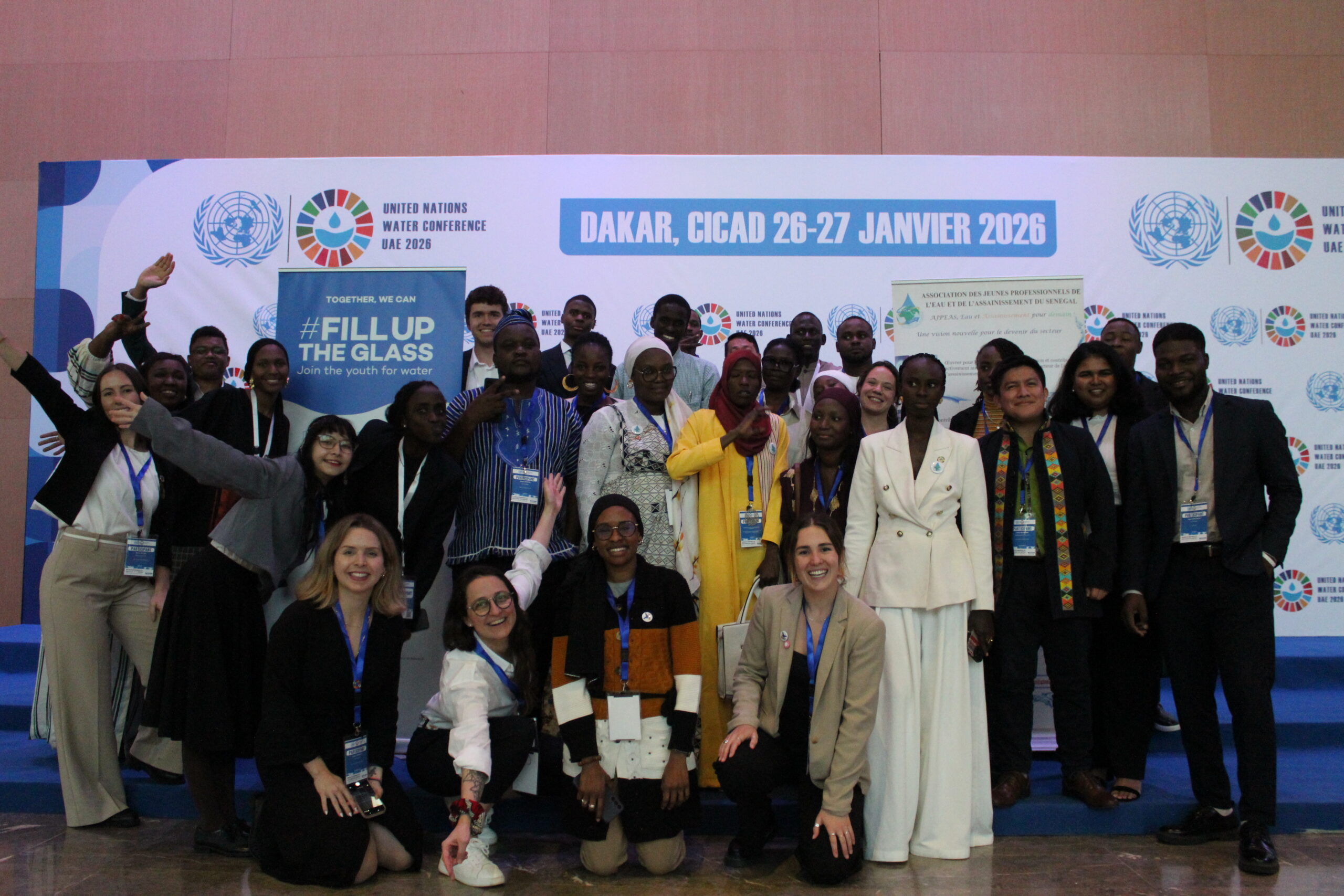
Ahead of the official events, ISW, together with key partners of the Global Youth Movement for Water, organized the “Youth Interactive Days” to strengthen youth capacity and coordinate mobilization. Participants engaged in a thematic session on Water and Peace and co-developed key youth messages and proposals.
Throughout the week, youth played a visible and impactful role through a dedicated youth track that aligned organizations around shared advocacy priorities, in close coordination with the UN Major Group for Children and Youth (UNMGCY) and Senegalese partners, including Association des Jeunes Professionnels de l’Eau et de l’Assainissement du Sénégal (AJPEAS) and Ipar.
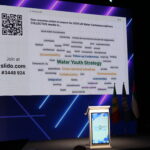
A key focus was advancing concrete mechanisms to institutionalize youth engagement—particularly the Water Youth Strategy and its implementation—to ensure that youth contributions translate into lasting outcomes on the road to the United Arab Emirates in December 2026 and beyond, feeding into reflections on the post-2030 agenda.
These preparatory sessions enabled strong youth interventions during stakeholder exchanges, the opening ceremony, and panels at both the One-Day Stakeholder Meeting and the High-Level Preparatory Meeting. Youth contributions were widely welcomed and demonstrated their added value in shaping discussions on water governance, accountability, and long-term planning.
“ We are not here just to be consulted; we are here to co-create”
– Handel Mux Roquel, member of the Latin America and Caribbean chapter of the World Youth Parliament for Water
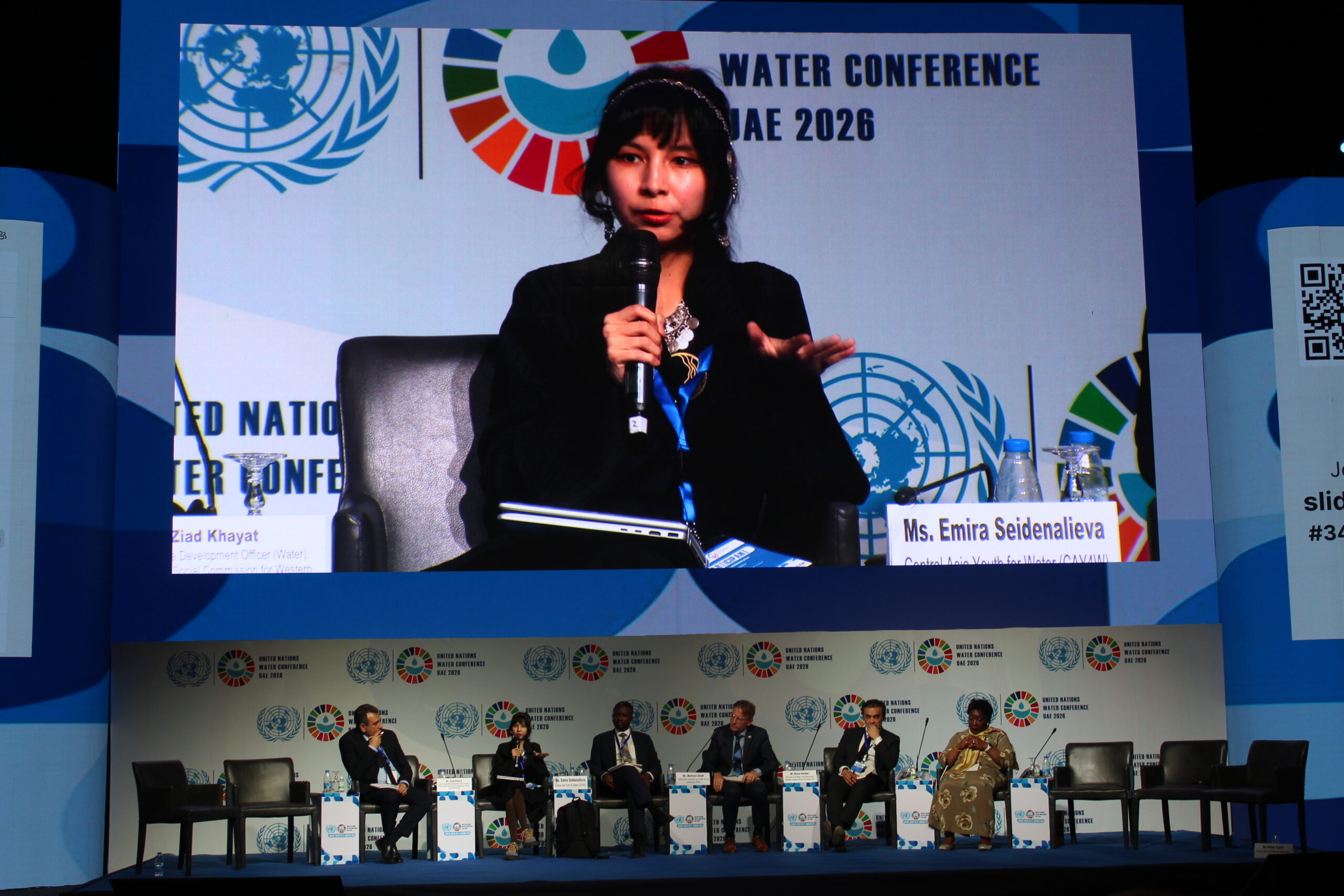
“The question is no longer whether young people have enough experience; the real question is how we cooperate across generations to deliver impact.”
– Emira Seidenalieva, member of the Central Asian Youth parliament for Water (CAY4W)
Shaping the post-2030 agenda and sustaining water diplomacy
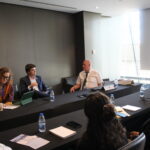
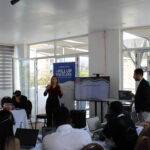
ISW, alongside the Butterfly Effect, co-facilitated discussions related to Interactive Dialogue 5 “Water in multilateral processes” during the one-day stakeholder meeting, organized by UN DESA, the African Civil Society Network on Water and Sanitation (ANEW) and the German WASH Network. This process was supported by several preparatory meetings and the drafting of a think piece shared in advance with participants, integrating ISW and coalition advocacy messages on strengthening global water governance.
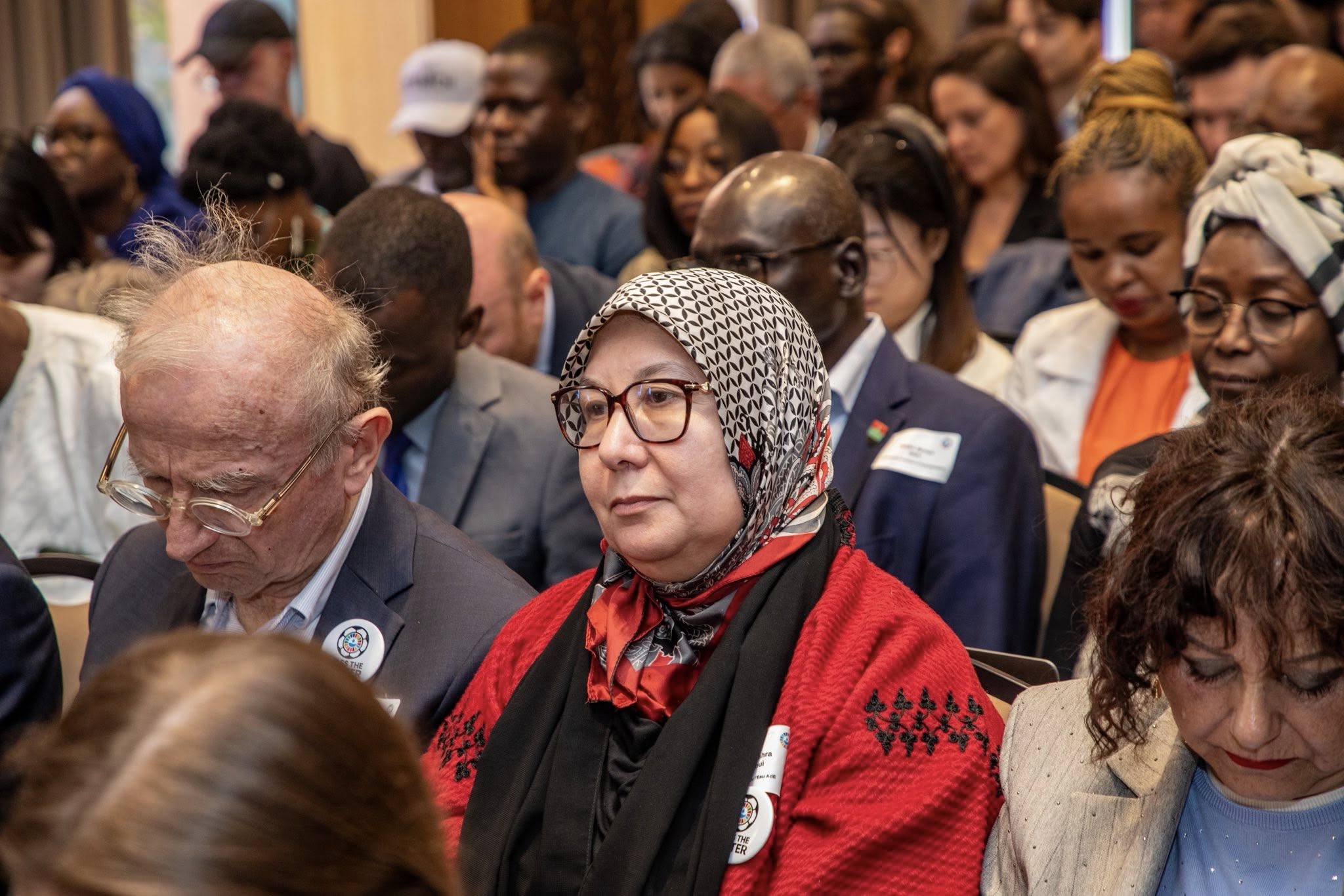
The dialogue brought together government representatives, UN entities, the UN Special Envoy, civil society, and the private sector, highlighting the importance of regular, inclusive multistakeholder spaces to align perspectives, build on existing frameworks, and avoid duplicating efforts. These exchanges also enabled ISW to establish direct contacts with several governments’ representatives, laying the groundwork for further coordination toward 2026 and beyond, including on youth and civil society proposals.
ISW’s mobilization in Dakar benefited from strong media outreach, including a press conference, interviews, and multiple media mentions, ensuring high visibility for ISW and its networks.
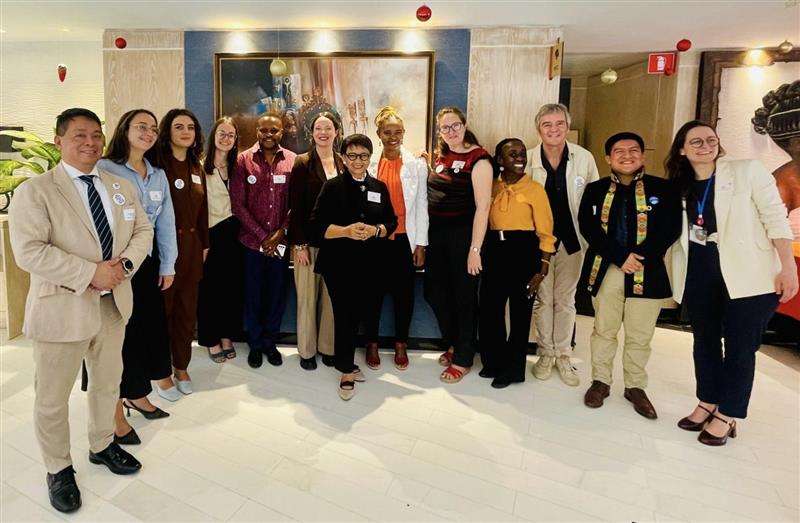
Our partnership with The Water Diplomat enabled the organization of an intergenerational dialogue on water in multilateral processes and the post-2030 agenda with youth representatives from the Global Youth Movement for Water and high-level figures from the German delegation – which is co-chairing the Interactive Dialogue 5 – and a representant of Senegal, co-host of the UN Conference. This exchange emphasized the urgency of building on the legacy of the 2030 Agenda by strengthening water diplomacy and creating a shared roadmap for action beyond 2030 and highlighting interactive dialogue 5 as a vital platform for embedding water security into broader global governance, ensuring coordination across climate, development and peace policy frameworks. Participants stressed the need to sustain political momentum, enhance cooperation between states and stakeholders, and translate commitments into practical partnerships and solutions ahead of the Conference in December.
Looking ahead: from Dakar to the global stage
At a moment when the world is rallying around a shared imperative: guaranteeing access to safe drinking water and sanitation for all, we are collectively calling for renewed efforts and stronger political will in response to an increasingly urgent situation. With the United Nations warning that we moved from a water crisis to a state of water bankruptcy, realism is essential. We must acknowledge the challenges posed by today’s crisis of multilateralism, while building on a clear conviction: now more than ever, collaboration at all levels is indispensable to shaping the world of tomorrow. Water stands as the ultimate test of our capacity to cooperate and to demonstrate that collective action remains our most powerful solution. This reality must also translate into a shift from discourse to implementation: moving from advocacy to measurable action, grounded in practical activities, clear outputs, and monitoring evidence of impact. The Dakar mobilization, and especially on the youth side affirmed a shared approach centered on leveraging existing partners, platforms, and events to deliver concrete results — even in low- or no-funding contexts — and using these results to build credibility, scale ambition, and unlock future support.
The mobilization in Dakar marked an important step in consolidating the International Secretariat for Water’s position as a legitimate catalyst for youth and civil society engagement in global water governance. Building on this momentum, ISW will continue to engage actively in the preparatory process through several upcoming milestones, including the 43rd UN-Water Meeting in Rome, the Dushanbe Water Process shaping the 2028 UN Water Conference and post-2030 agenda, the High-Level Political Forum in New York, while advocating for the institutionalization of youth and civil society’s participation in water-related decision-making processes. This engagement will be structured around a concrete implementation roadmap, focused on partner-led capacity development (including workshops, webinars, micro-learning modules and certification pathways), calling for the expansion of youth-accessible opportunities such as internships through private and institutional partners, and the establishment of a shared coordination, monitoring and reporting mechanism. Central to this approach is the development of measurable indicators (including trainings delivered, youth engaged, opportunities created, and activities implemented) supported by a dedicated platform to document actions, map partner contributions, and track collective progress, catalyzed by the Global Youth Movement for Water key members and its partners such as the UN Major Group for Children and Youth .
As the international community moves toward the 2026 UN Water Conference, ISW remains committed to ensuring that youth and civil society are not only present, but recognized as co-architects of solutions, concrete proposals, monitoring capacity, and collective energy to strengthen water governance for people and the planet.