In January 2026, youth actors mobilized in Dakar at a pivotal moment for global water governance, alongside the High-Level Preparatory Meeting for the 2026 UN Water Conference (January 26-27).
Through a series of events, including the Youth Interactive Days (January 23–24), the UNDESA One-Day Stakeholder Meeting (January 25) and the Youth Debrief Meeting (January 28), youth networks, organizations, and institutions came together to move beyond symbolic participation and toward structured coordination, collective strategy, and long-term implementation.
These youth-led spaces provided a shared platform to align visions, strengthen collaboration, and refine a common direction for the years ahead. They built on the continued work of the Global Youth Movement for Water – launched in 2022 at the 9th World Water Forum in Dakar, reinforcing a shift toward a more coordinated, institutionalized, and results-driven youth movement, grounded and structured around concrete actions, shared tools, and measurable impact.
At the heart of this mobilization are the members and partners of the Global Youth Movement for Water (GYMW), catalyzed by the International Secretariat for Water (ISW), bringing together youth organizations, professional networks, institutional partners, and regional youth platforms. Once again in 2026, Dakar has become a strategic convergence point to align youth voices, connect generations of water leaders, and position youth not as observers of global governance processes, but as co-architects of solutions.
Building a unified youth movement: the Youth Interactive Days
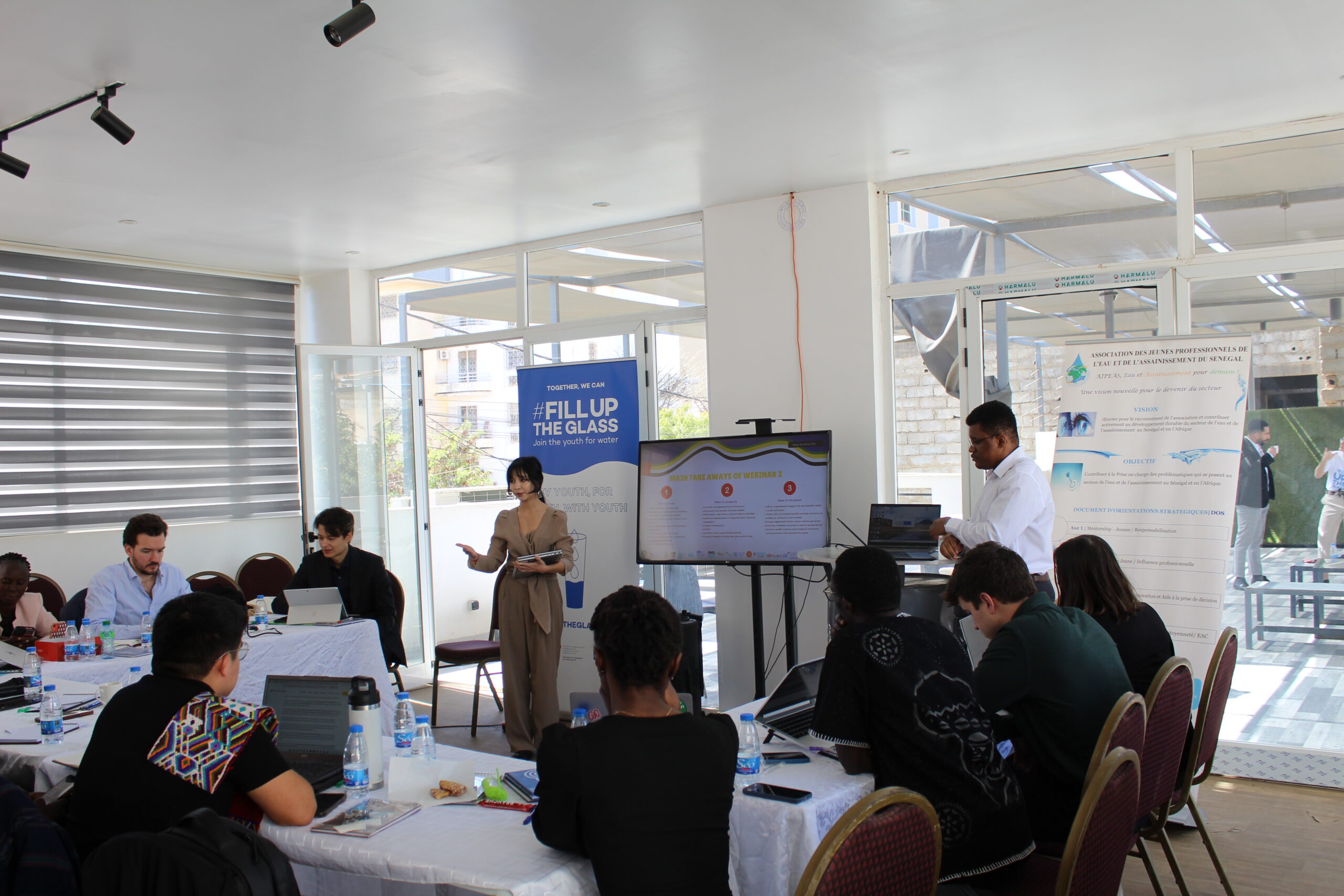
Ahead of the official UN events, ISW co-organized the “Youth Interactive Days” with the Association des Jeunes Professionnels de l’Eau et de l’Assainissement du Sénégal (AJPEAS) and UNESCO, in close collaboration with the UN Major Group for Children and Youth SDG 6 constituency Water Youth Network (UNMGCY SDG 6 WYN), the Geneva Water Hub, and other key partners of the Global Youth Movement for Water. These spaces brought together experts and youth actors from across generations, borders and sectors for coordination, learning, and collective strategy-building.
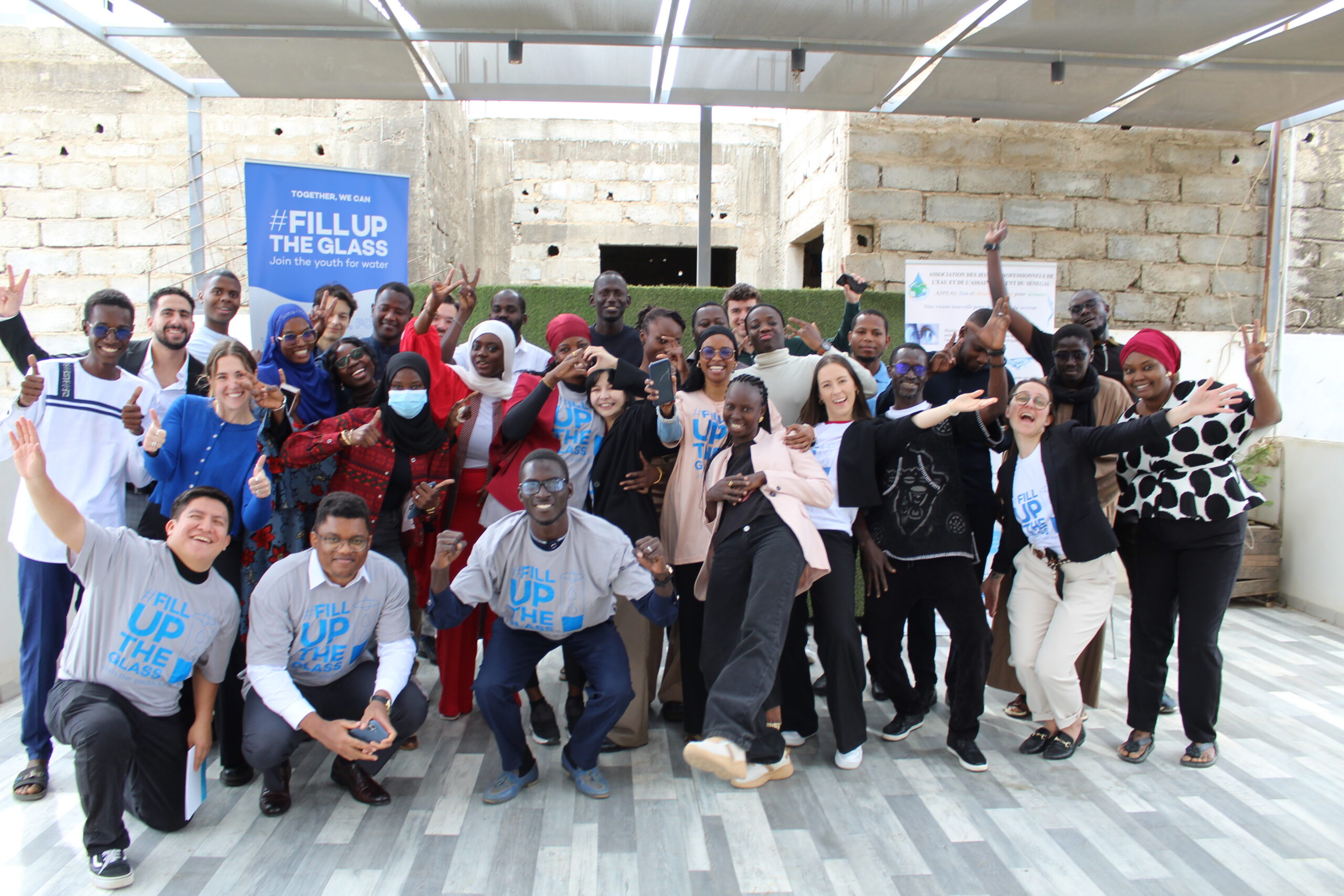
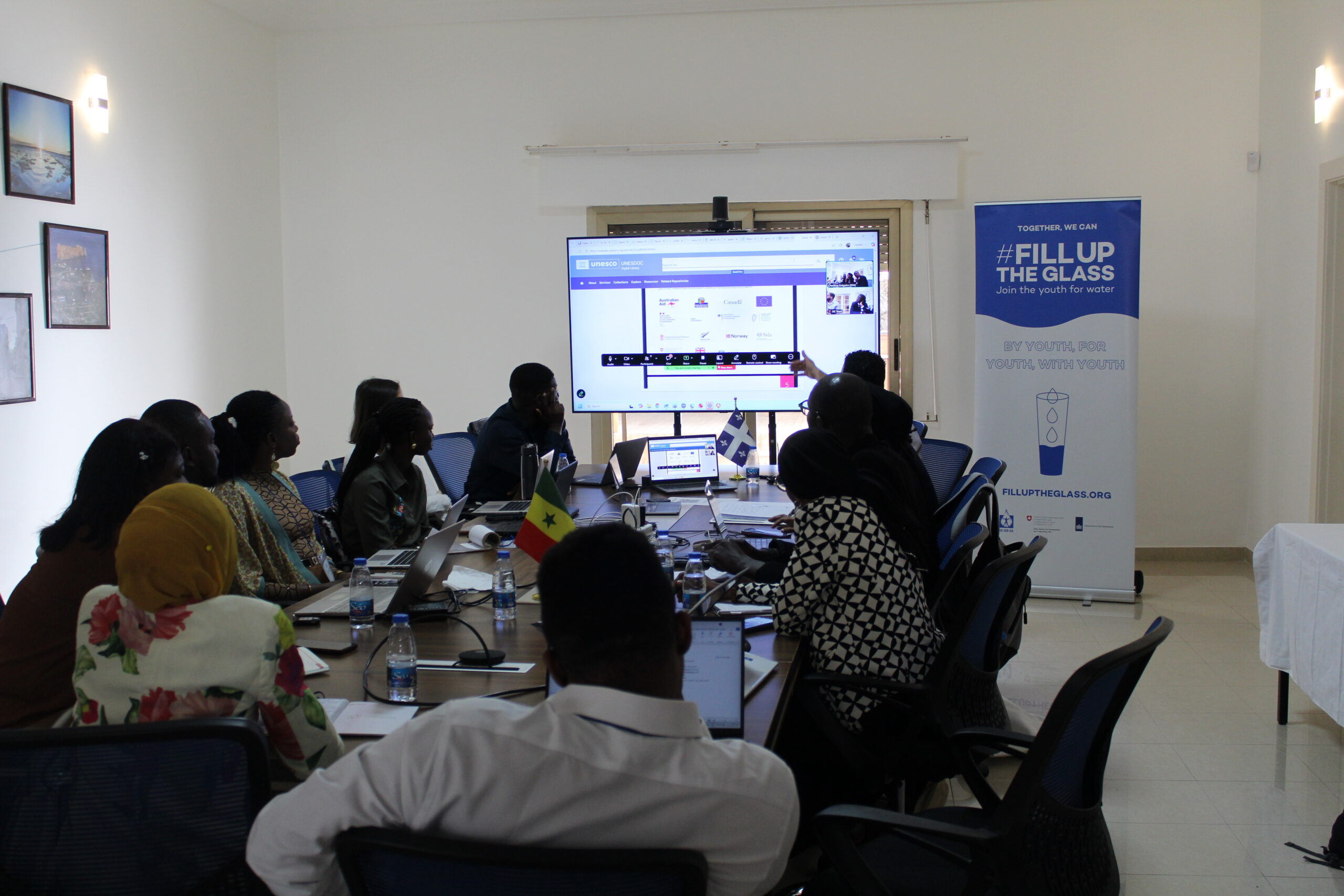
The pre-Kick-Off session on January 23rd created an informal and inclusive environment for dialogue, connection, and trust-building. Youth representatives from diverse regions and organizations shared experiences from previous regional and global water processes, including the 2023 UN Water Conference, and aligned around common priorities: strengthening the implementation of the Water Youth Strategy, building bridges between Dakar and Abu Dhabi and structuring long-term institutional pathways for youth engagement in water governance.
The Full-Day Kick-Off session on January 24th deepened this momentum. Participants developed a shared understanding of the Dakar Preparatory Meeting and the 2026 UN Water Conference, engaged in a thematic focus on Water and Peace, and co-developed youth messages and strategic priorities. Beyond formal sessions, moments of informal exchange over coffee and shared meals played a central role in building trust, cohesion, and a sense of collective identity across regions and networks.
These days confirmed a shared ambition: to move from isolated youth initiatives toward a coordinated global youth movement, capable of producing collective outcomes, strategic coherence, and long-term institutional impact.
UNDESA One-Day Stakeholder Meeting – Youth voices shaping the road to 2026
The One-Day Stakeholder Meeting convened by UN DESA, the African Society on Water and Sanitation (ANEW) and the German WASH Network ahead of the Dakar High-Level Preparatory Meeting marked a defining moment for youth engagement in the 2026 UN Water Conference process. Throughout the day, youth voices were not only visible, but structurally embedded in discussions on participation, governance, and implementation.
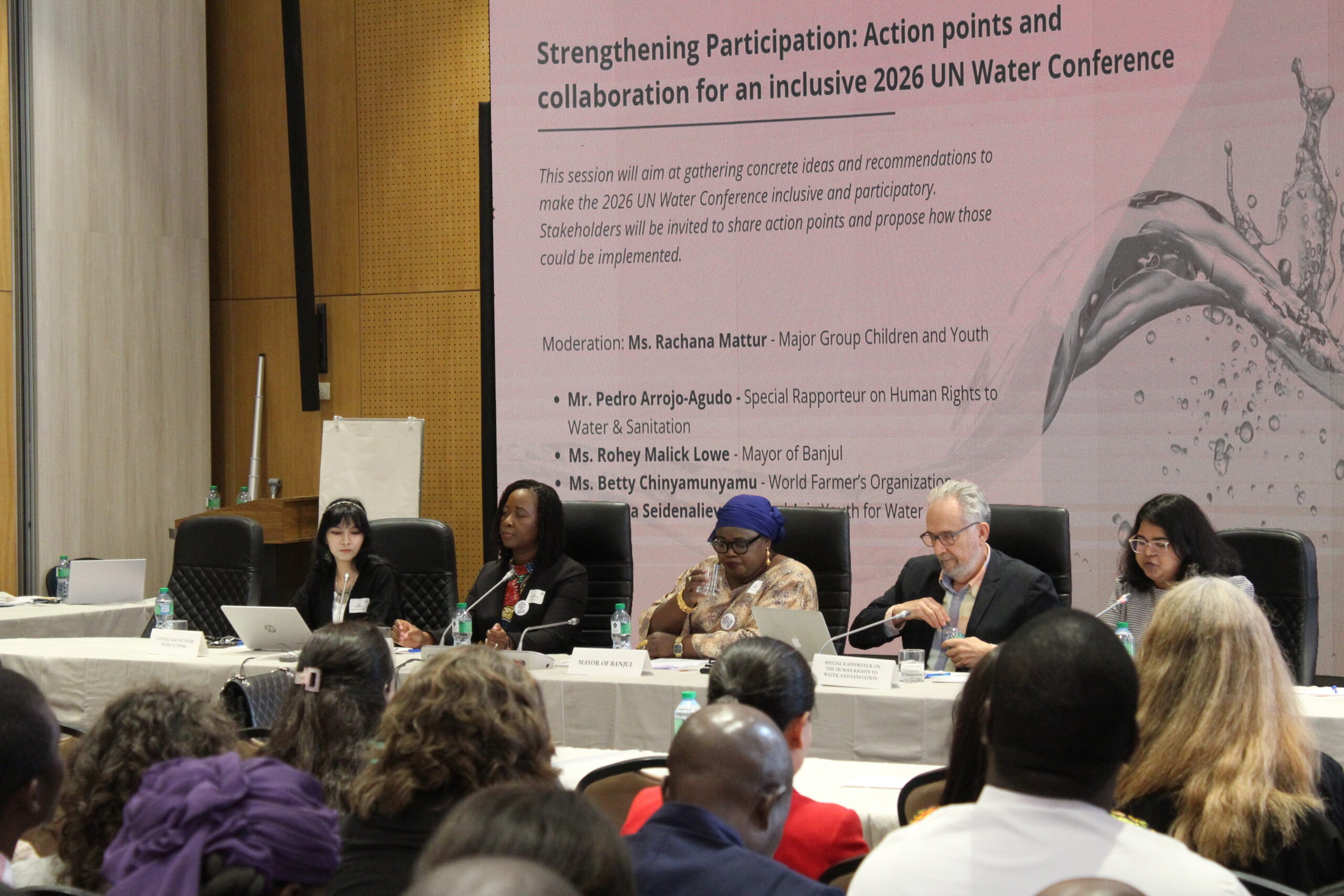
Notably, youth inclusion was central to the session “Strengthening Participation: Action Points and Collaboration for an Inclusive 2026 UN Water Conference,” moderated by Rachana Mattur of the UN Major Group for Children and Youth. The dialogue conveyed a clear message: inclusive water governance must begin in the preparatory phase ; without early and structured participation, equity and accountability cannot follow.
Emira Seidenalieva, lead of the Advocacy Working Group of the Central Asian Youth for Water network (CAY4W) and representing the Global Youth Movement for Water, delivered a strong call for institutionalization and implementation, stressing that youth engagement must move beyond consultation toward formal roles in decision-making and delivery.
We are not here to be consulted. We are here to co-create the water agenda and to implement it.”
She also highlighted the role of digital tools and grassroots innovation in connecting local realities to global agendas and making underrepresented voices visible in international processes.
We are generation Z, we are definitely more experienced and professional when it comes to digital tools.[…] Digital tools allow us to see the stories and lives behind the figures, connecting local action with global reporting.”
Across panels, working groups, and stakeholder dialogues, youth actors advanced clear priorities: structured regional consultations, dedicated funding for youth-led processes, and the formal alignment of the Water Youth Strategy with the roadmap from Senegal to the UAE. The meeting reinforced a shared vision: youth are not the future of water governance, they are a present and essential driving force in shaping the road to 2026.
Youth representatives at the High-level Preparatory Meeting
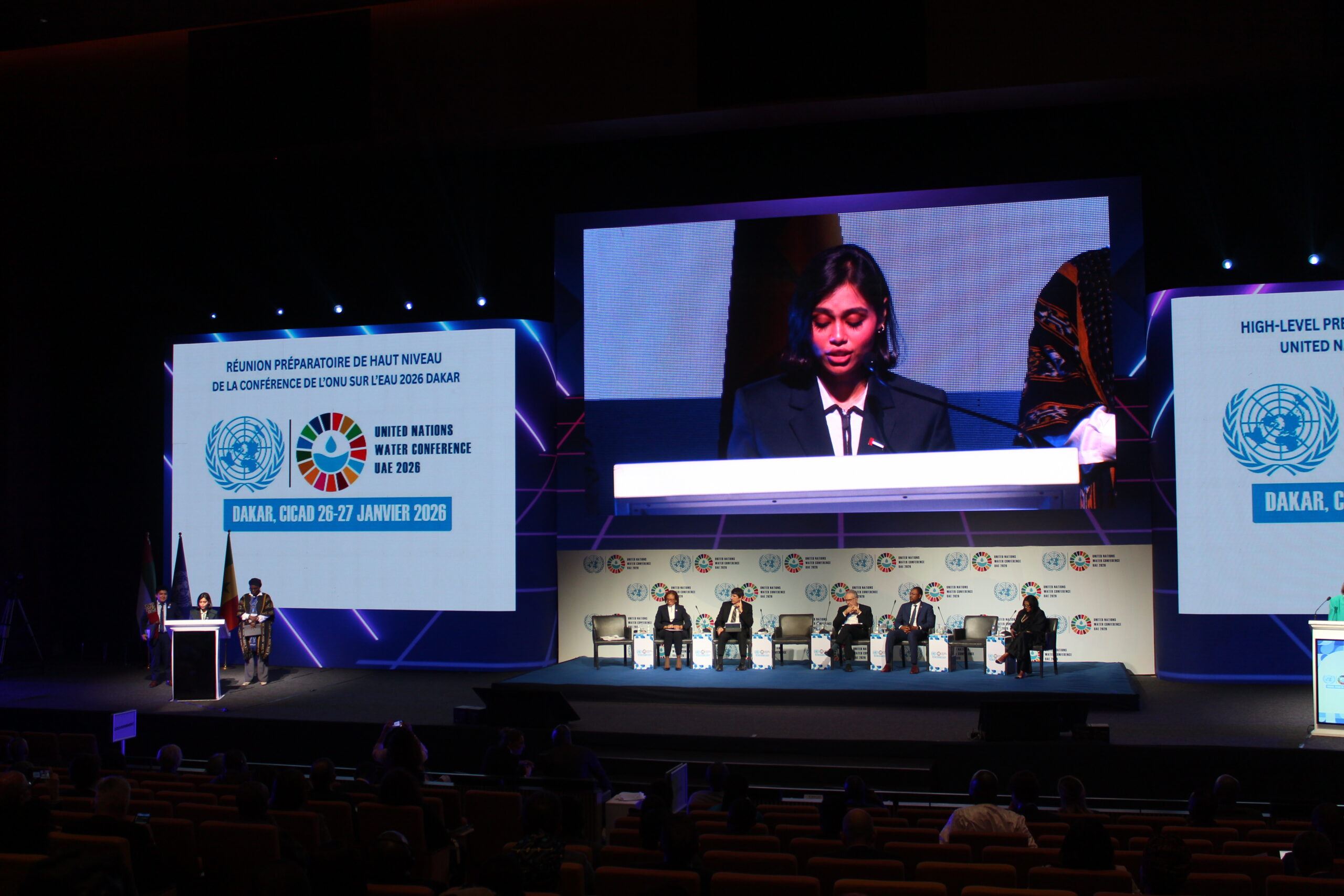
The Global Youth Movement for Water (GYMW) was strongly present throughout both days of the High-Level Preparatory Meeting, with youth leaders actively shaping discussions, interventions, and informal exchanges. Youth representatives were not only visible in official sessions, but also influential in framing the narrative around implementation, accountability, and long-term impact. Their collective presence demonstrated a shift from symbolic participation and coordination toward structured leadership and alignment within the 2026 UN Water Conference process.
Rouguiyatou Ba, president of the Association of Young Professionals for Water and Sanitation of Senegal (AJPEAS) opened the High-Level Preparatory Meeting with a powerful intervention grounded in history and continuity. She highlighted the legacy of the 9th World Water Forum (2022) in Dakar, where the Global Youth Movement for Water was officially born. She emphasized that the GYMW now carries a long-term regional and global vision extending well beyond 2026, toward 2028 and post-2030.
Handel Mux Roquel, member of the Latin America and the Caribbean Youth Parliament for Water (LAC YWPW), reinforced the need to translate political commitments into local realities. His intervention focused on implementation, co-creation, and shared responsibility:
The real challenge now is ensuring these commitments translate into concrete action in our territories, not just words. For the future of water, we as youth and Indigenous peoples do not want to be merely consulted. We are here to co-create, ready to fill up the glass together.”
Mouza Alshamsi, youth representative from the UAE Ministry of Foreign Affairs brought a regional and intergenerational perspective, highlighting the realities of water-scarce environments and the importance of long-term stewardship:
Growing up in the desert, we have achieved remarkable development, but our water resources have always been limited and precious. For our generation, water is an issue where multilateralism simply cannot fail. As we prepare for 2026, we look forward to bringing progress, and that begins in Dakar.”
Beyond the formal sessions, youth leadership was also reflected through media engagement and public narrative-building. In an interview with The Water Diplomat, youth representatives emphasized the importance of sustaining momentum beyond events and declarations.
Ninsiima Alison Linda, Focal Point for the Ugandan Youth Parliament for Water, underlined the link between global processes and local transformation, and the fact that water cannot be addressed in silos :
The real challenge is turning this moment into a lasting impact with all the stakeholders on board […] I believe momentum is alive when people see local action on the ground, where we see the water coming directly from the taps, people are literally drinking it, and it is clean and safely managed, education is taking place, and access to sanitation is improving.”
In the same interview, Tim Rotteveel, Project Leader at Wavemakers United and key member of the Global Youth Movement for Water, reinforced the need for youth capacity-building as a long-term investment in water governance resilience. Tim underlined the urgency of connecting global commitments with immediate local needs:
“True momentum comes from leveraging urgency into accountability and real responses, both globally and locally.”
These voices reflected a shared ambition: moving from fragmented youth initiatives toward a coordinated Global Youth Movement for Water capable of leveraging tangible outcomes and long-term systemic impact.
This collective direction was underscored in the speech delivered by Emira Seidenalieva, (CAY4W), who positioned youth not as stakeholders to be consulted, but as actors ready to implement:
“For many years, youth in the water sector have been invited to share perspectives and participate in discussions. Today, we are here with a different message: we are ready to implement.”
She recalled the 16-month collective process behind the Water Youth Strategy, developed by youth movements worldwide, structured around clear priorities: education and capacity development, career opportunities and innovation, meaningful youth engagement in water governance and management. Commitments by Senegal and the United Arab Emirates to advance the implementation of the Water Youth Strategy toward 2026 were highlighted, alongside a call to build a coalition of partners to translate it into concrete action, with GYMW positioned to support coordination.
A key moment in this progress came during the interactive live polling in the main auditorium, where participants were asked:
“Looking at the year ahead from Dakar to Abu Dhabi, what strategic opportunities can contribute towards an impactful 2026 UN Water Conference?”
Many participants highlighted Water for Peace as a strategic priority as it cuts across all six dialogue themes and directly links water governance to conflict prevention, resolution, and cooperation. As emphasized by the Geneva Water Hub, transboundary water cooperation, justice, and the protection of water resources are foundational conditions for peace, making Water for Peace a unifying pathway toward an impactful 2026 UN Water Conference from Dakar to Abu Dhabi.
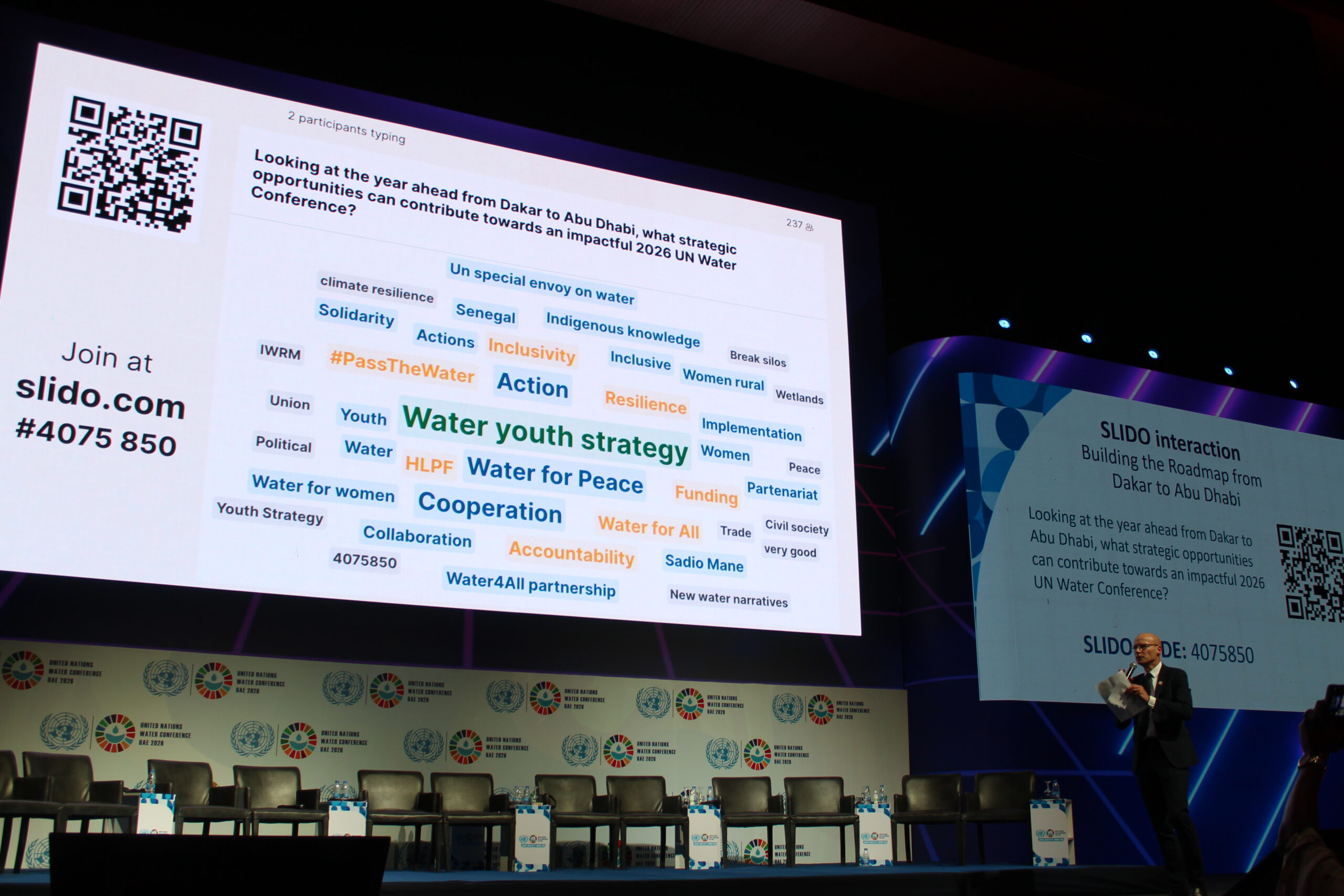
However, the most prominent and repeated response on the board was clear: “Water Youth Strategy”.
The presence of youth at the High-Level Preparatory Meeting was not symbolic: it was strategic, visible, and impactful. The Global Youth Movement for Water and the Water Youth Strategy gained strong recognition, legitimacy, and visibility across formal sessions, informal exchanges, and public platforms. Youth did not just participate in Dakar, they participated in shaping the narrative, the priorities, and the direction.
Youth Debrief – Building action together
The Youth Debrief Meeting on January 28th in Dakar brought together youth leaders from Senegal, the United Arab Emirates and global partners to connect the momentum built throughout the week and translate it into concrete pathways for collaboration toward the 2026 UN Water Conference.
The meeting marked a clear progression in collective positioning: from advocacy and visibility toward structured and measurable implementation. Participants converged around a shared direction : focusing on a limited number of realistic, high-impact actions – particularly those that respond to concrete barriers faced by young people, strengthening existing partnerships, and building durable institutional pathways for youth engagement in water governance. One concrete example discussed during the debrief was youth access to paid internships and entry-level jobs: despite the growing needs of the water sector, professional insertion remains a major barrier for young people. This highlighted the need for implementation efforts to focus more deliberately on tangible workforce pathways and human capital development.
Emphasis was placed on activating existing opportunities and infrastructures through partner platforms, events, programs, and networks. Implementation is envisioned through partner-driven contributions including joint training and workshops, partner-hosted webinars, youth internships and capacity-development opportunities, generating practical and visible outcomes on the ground, supported by simple, shared indicators to track progress and results.
By the end of 2026, the objective is to demonstrate active implementation, documented outcomes, and functioning partnerships, while bringing forth clear gaps and unmet needs. This foundation will support the mobilization of new partners, resources, and investments to scale impact beyond the Conference and into the post-2030 horizon.
From Dakar to Abu Dhabi and beyond, the Global Youth Movement for Water is consolidating as a collaborative, structured, and coordinated force for change in the water sector. Youth are no longer asking to be consulted. They are building the systems shaping the future.