On 11th October, the International Secretariat for Water (ISW) co-organised and participated in the 3rd Syrdarya Youth Forum, organised by the Youth Group for Protection of the Environment in Gulistan, in the Sughd region of Tajikistan.
The Forum built on the recent positive developments in the relations between Uzbekistan, Tajikistan and Kyrgyzstan, with a historical border agreement, the Khujand treaty, signed in March 2025. This year, the Syrdarya Youth Forum brought together Green Patrols, schoolchildren undergoing environmental education, from three of the countries of the Syrdarya Basin – Tajikistan, Uzbekistan and, for the first time, Kyrgyzstan –, accompanied by their teachers.
ISW’s contribution to the Third Syrdarya Youth Forum
As co-organiser of the forum event, the ISW Representative Office in Tajikistan – CoWaSS project also moderated the Pannel session on Climate, Water and DRR. The session also saw the participation of a representative from the Youth Team at ISW HQ, who explained the work of the Central Asia Youth for Water (CAY4W) Network, which empowers youth to promote “borderless water as a vector of peace in Central Asia”.
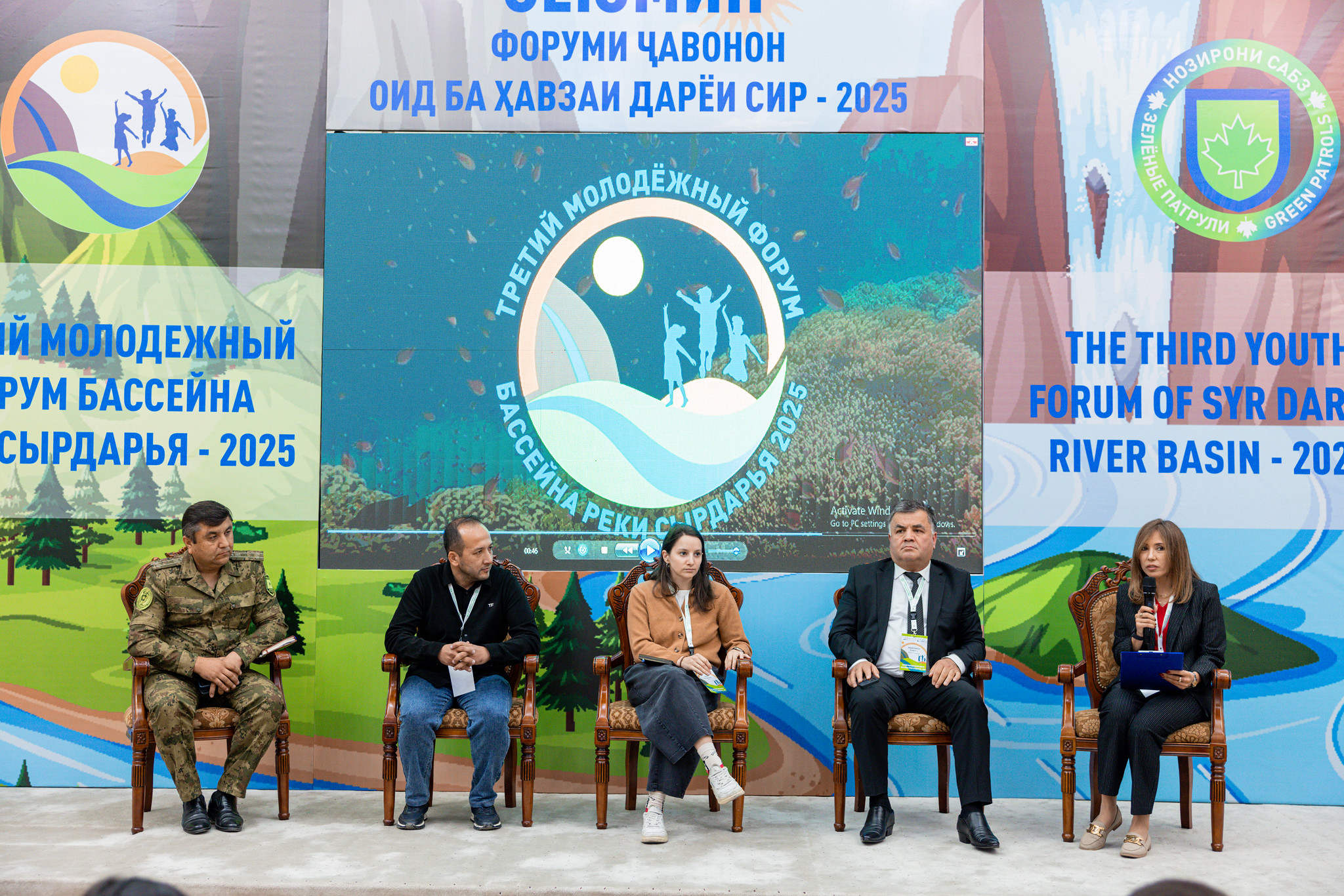
Focusing on the linkage between youth and climate, water and disaster risk reduction, the key outcomes of the discussion revolved around concrete proposals to strengthen youth coordination and intergenerational cooperation between the Green Patrols and youth water networks such as the Central Asia Youth for Water, for example through mentorship programmes or through exchange of experiences between youth water leaders approaching the water sectors and Green Patrols still enrolled in school. Moreover, the Syrdarya River Basin Organisation in Tajikistan shared that they are considering to reserve one seat for youth at the Tajik Syrdarya Basin Council, which would provide a systematic, structural platform for youth to engage in water governance and bring youth perspectives. in the Tajik side of the Syrdarya river basin.
A masterclass on water quality, hygiene and sanitation
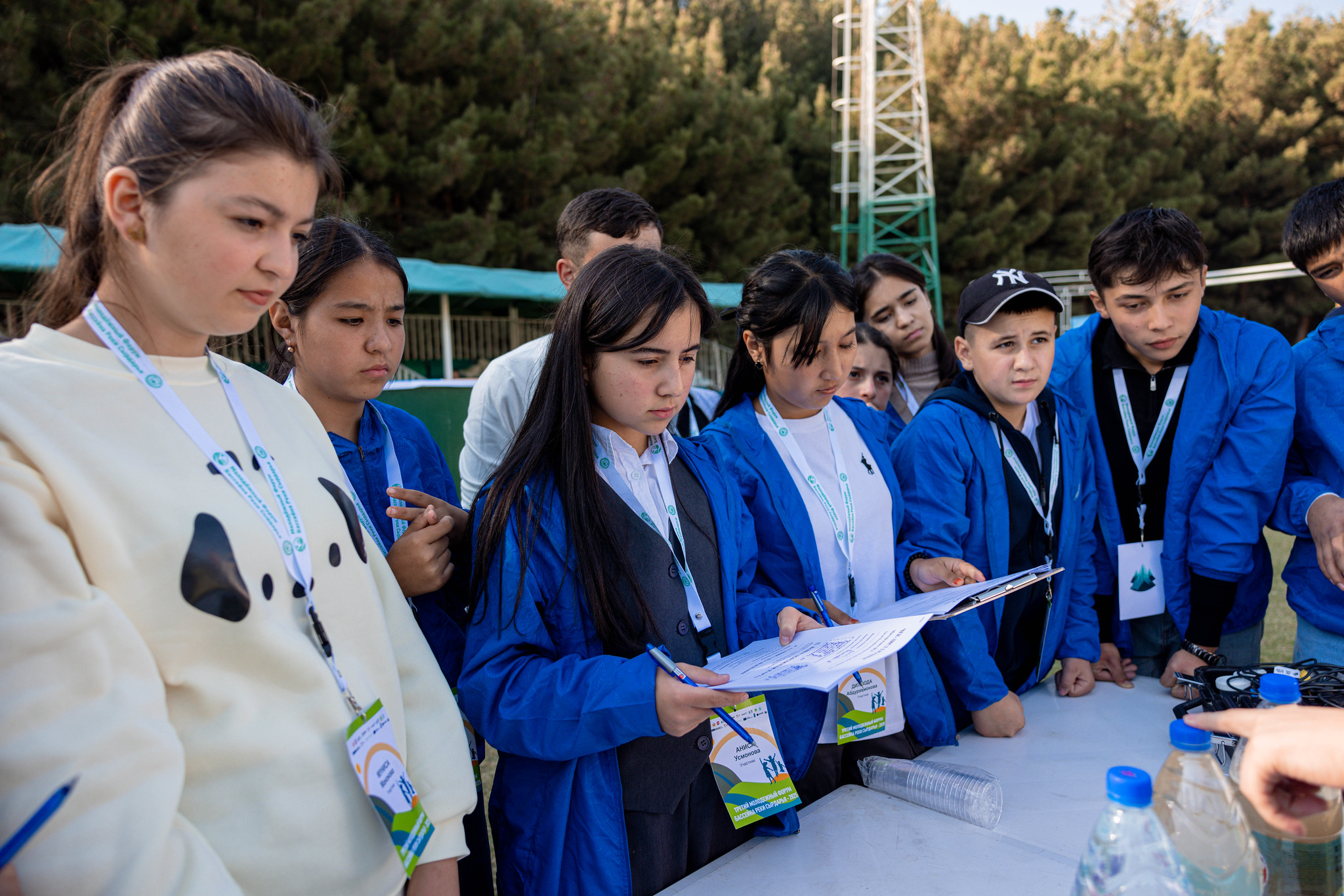
In the afternoon, the Representative Office of the International Secretariat for Water in Tajikistan organised a practical masterclass for schoolchildren participating in the Forum on water quality, hygiene and sanitation. The session employed hands-on learning and practical activities to build a solid understanding of safe water practices and promote healthy behaviours among youth.
The first activity of the masterclass was a water quality demonstration, where students learned about simple water purification techniques and created DIY water filters using plastic bottles, layers of sand, gravel and activated charcoal. The exercise showed that natural filtration can improve water clarity and reduce contamination.
Then, the ISW team focused on the importance of regular handwashing as a key preventative measure again waterborne and hygiene-related diseases. ISW developed and distributed posters among the participants fort further dissemination in their classroom to encourage peer-to-peer education and further empower participants to become agents of change in their classes.
The masterclass also inlcuded a visual explanation of the sanitation chain which covered waste containment, transport, treatment and safe disposal. The ISW trainers discussed with the students the linkage between poor sanitation and public health risks, by giving the example of unsafe pit latrines potentially contaminating groundwater.
The interactive format encouraged students to experiment, discuss and share what they learned with their peers, fostering a sense of responsibility as young WASH ambassadors in their schools and communities.
Looking forward
This event proves the importance and impact of WASH and environmental education among youth and children. The ISW Representative Office in Tajikistan is proud to support YGPE’s work and will continue engaging with YGPE on WASH education and awareness-raising.